
Connections
The Hands That Wove Cloth Wrote the First Program
From the Jacquard loom to punched cards: a fine thread between patterns and calculation
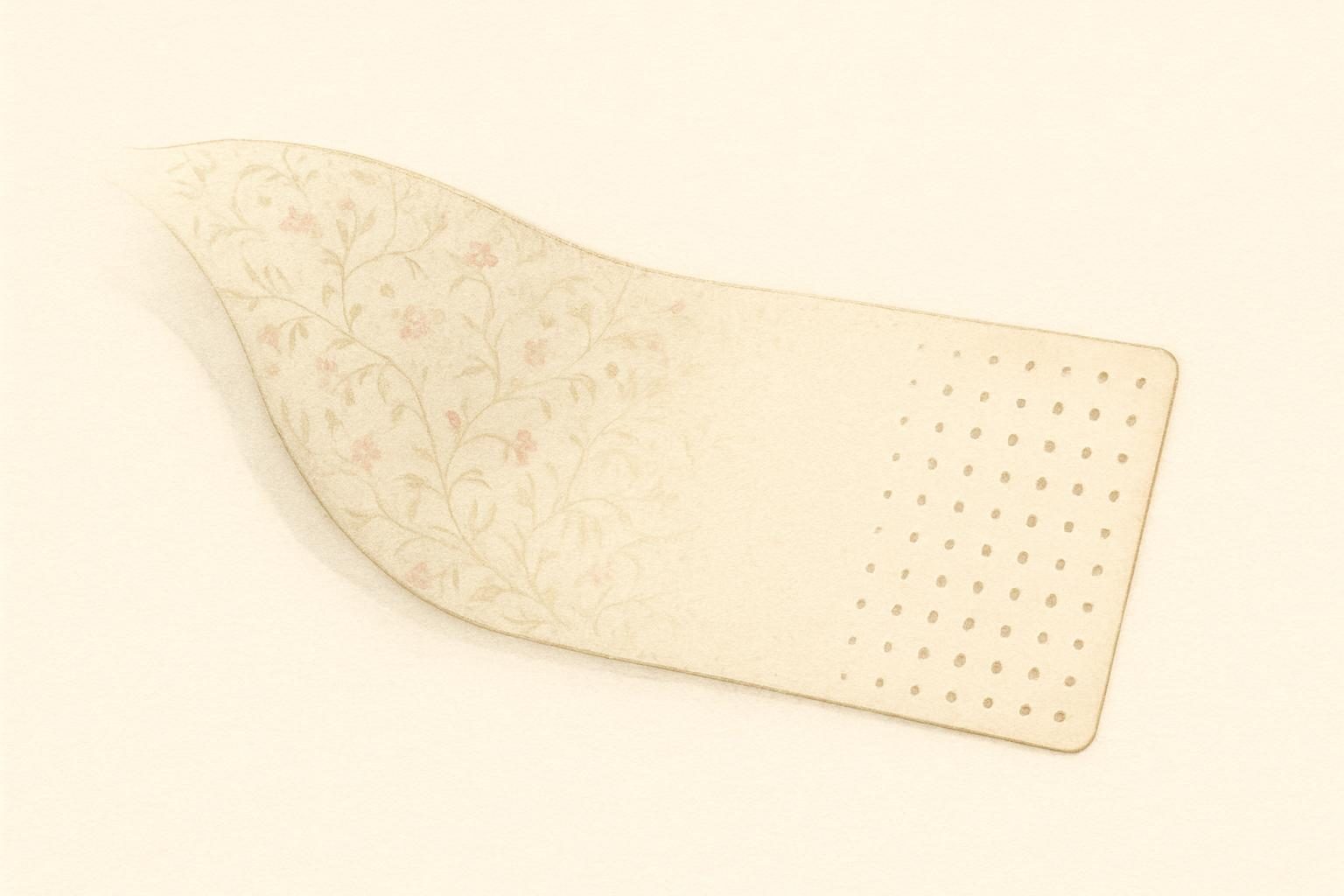
Weaving is often treated as the very image of handwork. Yet within its movements lay an early form of computing.
Weaving is often treated as the very image of handwork: earth, thread and human intuition. Would it be too great a leap to suggest that an early form of today's computer was hidden in those movements? These two things are not merely distant relatives. A single thread connects them.
The loom made practical by Joseph Marie Jacquard in France in 1804 specified patterns with pierced boards, or punched cards. The arrangement of holes determined which threads would be lifted. A pattern that had existed only in a craftsperson's intuition and memory became information that could be recorded outside the person. With the cards, the same pattern could be woven in their absence.
The nineteenth-century mathematician Charles Babbage and his collaborator Ada Lovelace noticed this system. Lovelace is said to have written that the Analytical Engine would weave algebraic patterns much as the Jacquard loom wove flowers and leaves. The weaving metaphor was no ornament. She saw that pattern-making and calculation shared a structure.
Punched cards subsequently passed through statistical processing machines into twentieth-century computers. It would not be accurate, however, to simplify this into 'the loom gave birth to the computer'. Computing emerged from countless interwoven histories, with no single starting point. Still, the discovery was certainly here: a succession of binary choices about lifting or lowering threads could become both pattern and calculation.
Language carries the same shadow. Text and textile are both said to descend from the Latin texere, to weave. We have long described writing as weaving. The dots may have been connected long ago, closer together than we imagine.
ABC Editorial Team
Editorial team