
Connections
Why Kintsugi Appears in Management Books
Between repairing a broken vessel and the metaphor of emotional recovery
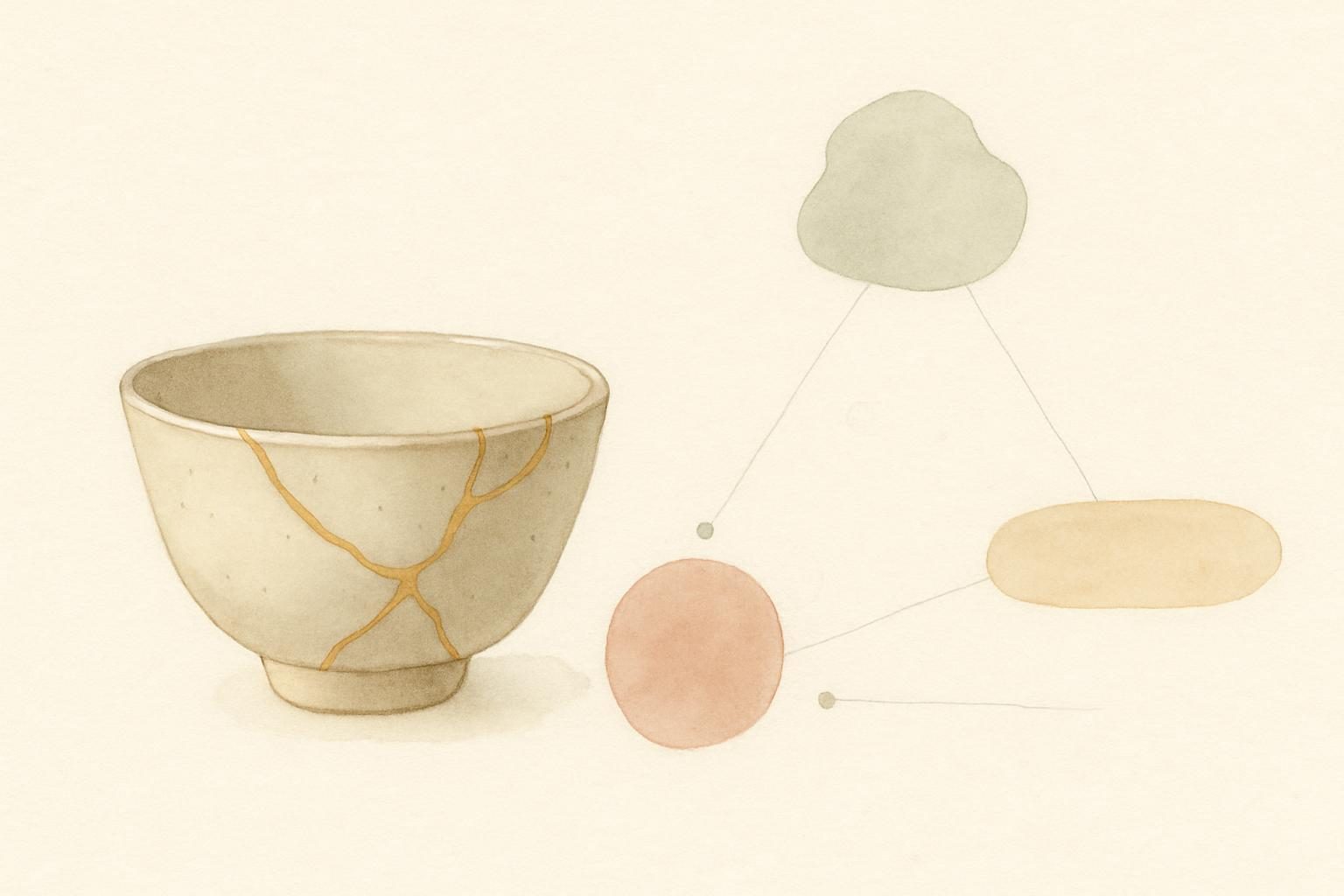
The Japanese art of repairing ceramics with gold is widely quoted in Western business and wellness writing. Why do repair and recovery, economics and psychology converge on this word?
In recent years, kintsugi has appeared in unexpected places: management books about resilience, therapists' essays and sustainability conference materials. Somehow the old Japanese technique of repairing broken bowls with lacquer and gold powder has become a shared language for recovery from failure.
Kintsugi joins ceramic fragments using lacquer's adhesive strength and decorates the seams with gold. Its origins are disputed. It is often associated with Muromachi-period tea culture, but many accounts involving particular people or anecdotes lack confirmed documentary support. What is clearer is how making breaks visible rather than hiding them resonates with tea culture's attention to the imperfect.
One background to its overseas popularity is post-traumatic growth, a field proposed by psychologists Richard Tedeschi and Lawrence Calhoun in the mid-1990s. It studies how people who experience adversity or loss may acquire different strengths and perspectives. Kintsugi's visible scars transformed into value proved a strikingly compatible metaphor.
Economics was developing a parallel concern: the right-to-repair movement. Repairing things rather than replacing them arose from reflection on mass production and disposal. Kintsugi is convenient here too, presented as Eastern wisdom that gives broken objects new value.
We should pause. Kintsugi, post-traumatic growth and the right to repair are independent practices arising from different needs and times. Linking them through one beautiful metaphor risks thinning out their individual weight. Emotional wounds are unlike cracks in pottery, and repaired scars do not shine gold to every observer. Psychology researchers themselves have warned against easy generalization.
Even so, the convergence deserves thought. Refusing to feel ashamed of repairs, seeing instead evidence of time and care, may be needed in objects, minds and economies alike. As a quiet objection to the assumption that efficient replacement with something new is always right, kintsugi lives on in the language of very different fields.
How we treat broken things is both a technical question and a question of perception. Kintsugi may teach less about the method of repair than about an attitude that does not shame what is chipped.
FAQ
- Who began kintsugi, and when?
- It is often linked to Muromachi-period tea culture, but many origin stories involving particular people lack documentary confirmation.
- What is post-traumatic growth?
- A psychological concept proposed by Tedeschi and Calhoun in the mid-1990s: people may gain different strengths or perspectives through experiences of adversity and loss.
ABC Editorial Team
Editorial team