
Technology
Acting Before We Know
Inferring intelligence and the boundary of human judgment
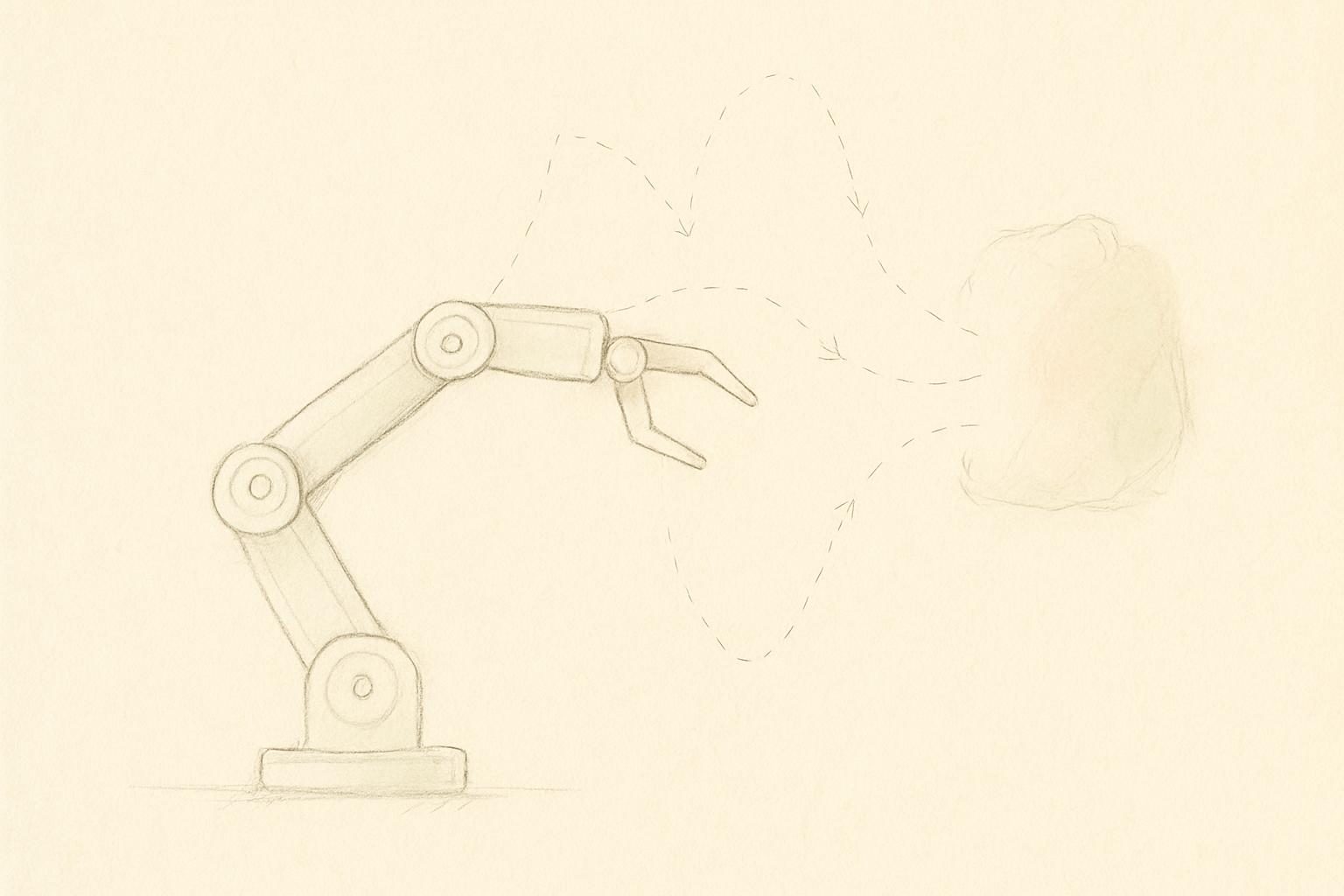
Robots once could not move without perfect instructions. Researchers now face a different task: machines that decide while living with ambiguity.
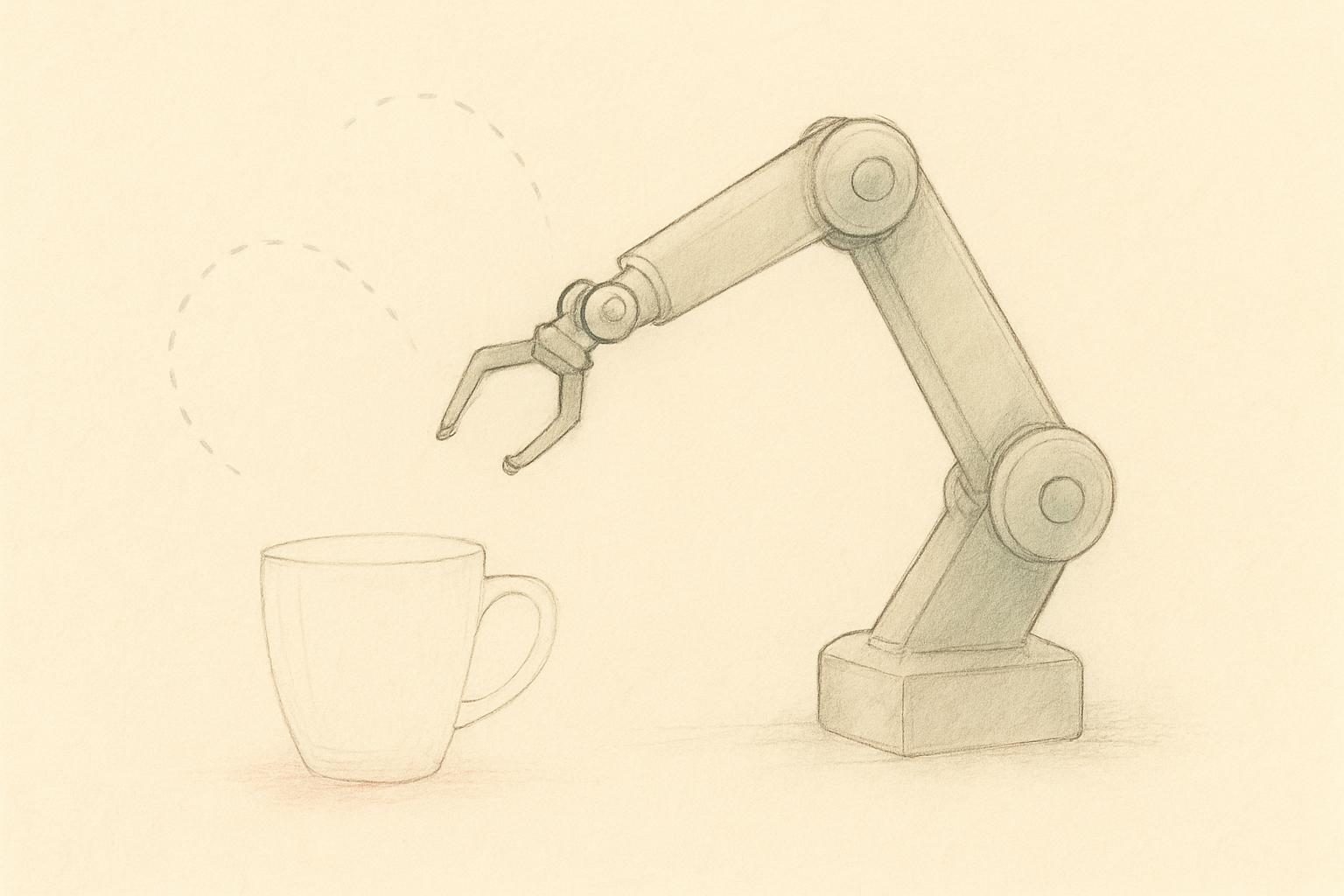
A factory robot arm is astonishingly precise and astonishingly inflexible. It places a part at prescribed coordinates, at a prescribed angle, with prescribed force. It can do this because its world has been quantified. Changes in light and small positional shifts have been eliminated beforehand. Perfect instructions permit perfect movement. For nearly half a century, that was a premise of robotics.
The premise breaks down as soon as machines enter unstructured worlds such as homes, restaurants or disaster sites. Is the glass on the table cracked, or is its shadow dark? Did someone stop suddenly to find something in a bag, or because they feel unwell? No instruction book supplies the right answer in advance. The robot must choose its next move without knowing.
Robotics research over roughly the past decade has confronted precisely this uncertainty. Approaches range from probabilistic inference and Bayesian updating to borrowing commonsense patterns learned by large models. They share an idea: retain several weighted possibilities rather than declare one answer. The glass might have an eighty-percent chance of being cracked and a twenty-percent chance of merely casting a shadow. The robot chooses its next action with that uncertainty intact.
This resembles human judgment. In most everyday situations, we lack perfect information. We infer someone's mood from an expression or guess a train delay's cause from the crowd. We cannot be certain, but cannot stop acting. Proceeding with ambiguity may be less a by-product of intelligence than part of its core. Giving robots the power to infer quietly reopens the old question of intelligence itself, beyond merely making machines cleverer.
Boundaries must nevertheless be discussed. How much should we entrust to a medical robot that thinks a bone is probably broken? How should a self-driving car weigh the possibility that a child will run into the road? Inferring machines can help through speed and breadth, but bring the question of responsibility for wrong inferences. We must distinguish what technological advances can settle from what society must decide by agreement.
Acting without knowing may sound dangerous. Yet machines that awaited perfect instructions proved useful only in restricted places. To leave the factory and join our untidy lives, machines must learn, as humans do, to accommodate uncertainty. Becoming intelligent may mean not ceasing to make mistakes, but making them in ways that allow correction. That is not so distant from what we do every day.
FAQ
- What technologies does inferring intelligence refer to?
- An umbrella term here for approaches such as probabilistic inference and Bayesian updating, which weight several possibilities instead of declaring one answer. It does not name a particular product.
- Is entrusting ambiguous judgments to machines dangerous?
- It depends on the field. In medicine or autonomous driving, where mistakes have major consequences, technical accuracy and social agreement about responsibility must be considered separately.
ABC Editorial Team
Editorial team