
Life
Nobody Blames the Dried Apricots
Wine, headaches and the long-running case against sulphites
'Organic wine won't leave you feeling rough the next morning.' In conversations about wine, this claim almost always appears.
'Organic wine won't leave you feeling rough the next morning.' In conversations about wine, this claim almost always appears. No preservatives, no headache: a tidy explanation. But when we examine it step by step, the story begins to run into trouble.
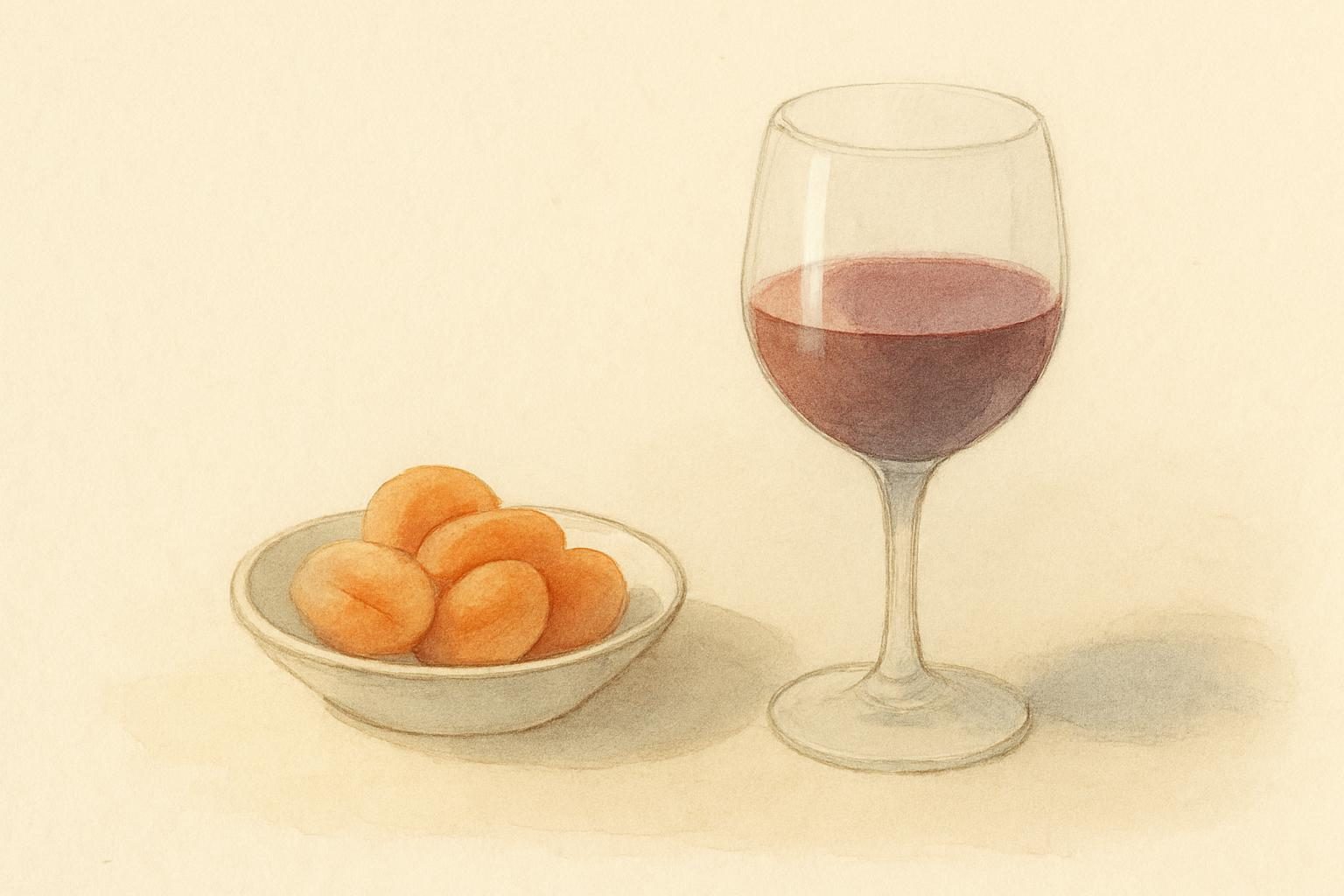
Start with quantity. Sulphites are not an additive unique to wine. Dried apricots and raisins often contain much more, sometimes by orders of magnitude. If sulphites were the culprit behind headaches, a bag of dried fruit ought to be far more alarming than a bottle of wine. Yet we rarely hear of someone getting a headache after three dried apricots.
There is another awkward fact. Red wine usually contains fewer sulphites than white. Its pigments and tannins help resist oxidation, allowing lower additions. Yet when people say wine gives them a headache, they generally mean red. The wine containing less of the suspected substance attracts more suspicion. As testimony, it is rather unhelpful.
Does organic wine contain no sulphites, then? It does contain them. EU rules allow sulphites in organic wine, simply at lower limits than in conventional wine. Moreover, yeast naturally produces sulphur dioxide during fermentation. Wine entirely free of sulphites is, in practice, almost nonexistent.
What does organic certification promise? Something about the vineyard: how the soil is treated, what is not sprayed and how the grapes are grown. That is a perfectly respectable promise and a sound reason to choose a wine. But it is a promise to the land, not to your head. The cause of wine headaches remains unsettled. Alcohol itself, dehydration, histamine, tyramine and tannins are among the candidates, but none provides a decisive answer.
The claim that people in a certain region live longer because they drink wine takes a similar shape. It is understandable to want to explain local longevity through a bottle on the dinner table. Yet a long life rests on an inseparable bundle of conditions: what people eat, how far they walk and whom they dine with. More recently, even the old belief that moderate drinking prolongs life has been questioned on statistical grounds. Had people who stopped drinking because of ill health been counted among nondrinkers? If so, the comparison groups were different from the beginning.
In the end, perhaps we want this story because we want to place something we love on the shelf marked 'healthy'. We probably need not go that far. How the soil is cultivated, and the simple fact that the wine tastes good, are reasons enough to choose organic wine, without claiming it prevents headaches. Drinking something that needs no excuse, without making an excuse for it, is a considerable luxury.
ABC Editorial Team
Editorial team