Life
A Quiet Reflection on Time without Food
Another kind of richness beyond the fasting trend
Sixteen-hour fasts and fasting routines have become familiar health practices. Before discussing their effects, we might pause to consider what time without food has meant in everyday life.
Sixteen hours without eating, or two weekend days without solid food: fasting has rapidly entered daily life in recent years. Autophagy now sounds almost like an everyday word rather than a specialist term.
Autophagy is the process by which cells break down and recycle old proteins and other internal material. Yoshinori Ohsumi's 2016 Nobel Prize in Physiology or Medicine brought it wide attention. A careful distinction is necessary, however. The mechanism was clarified mainly through basic research in yeast and animals. Long-term human studies have not adequately established the claim that sixteen-hour fasting activates autophagy and therefore improves health. Human research into time-restricted feeding is growing, but largely concerns short-term effects on weight management and blood sugar. It does not yet establish benefits for everyone. That should be stated without exaggeration.
Fasting itself is nevertheless far from new. Buddhist restraint, Christian Lent and Islamic Ramadan place time without food within life. Before being health techniques, these were ways to practise restraint and reconsider the everyday. Japan's long-familiar instruction to eat until eighty-percent full likewise suggests wisdom in leaving something unfilled.
The modern trend differs perhaps in its language of optimization: greater concentration, fat-burning, longer life. Once such benefits take centre stage, even not eating becomes a task. Yet time without food once also contained the possibility of doing nothing.
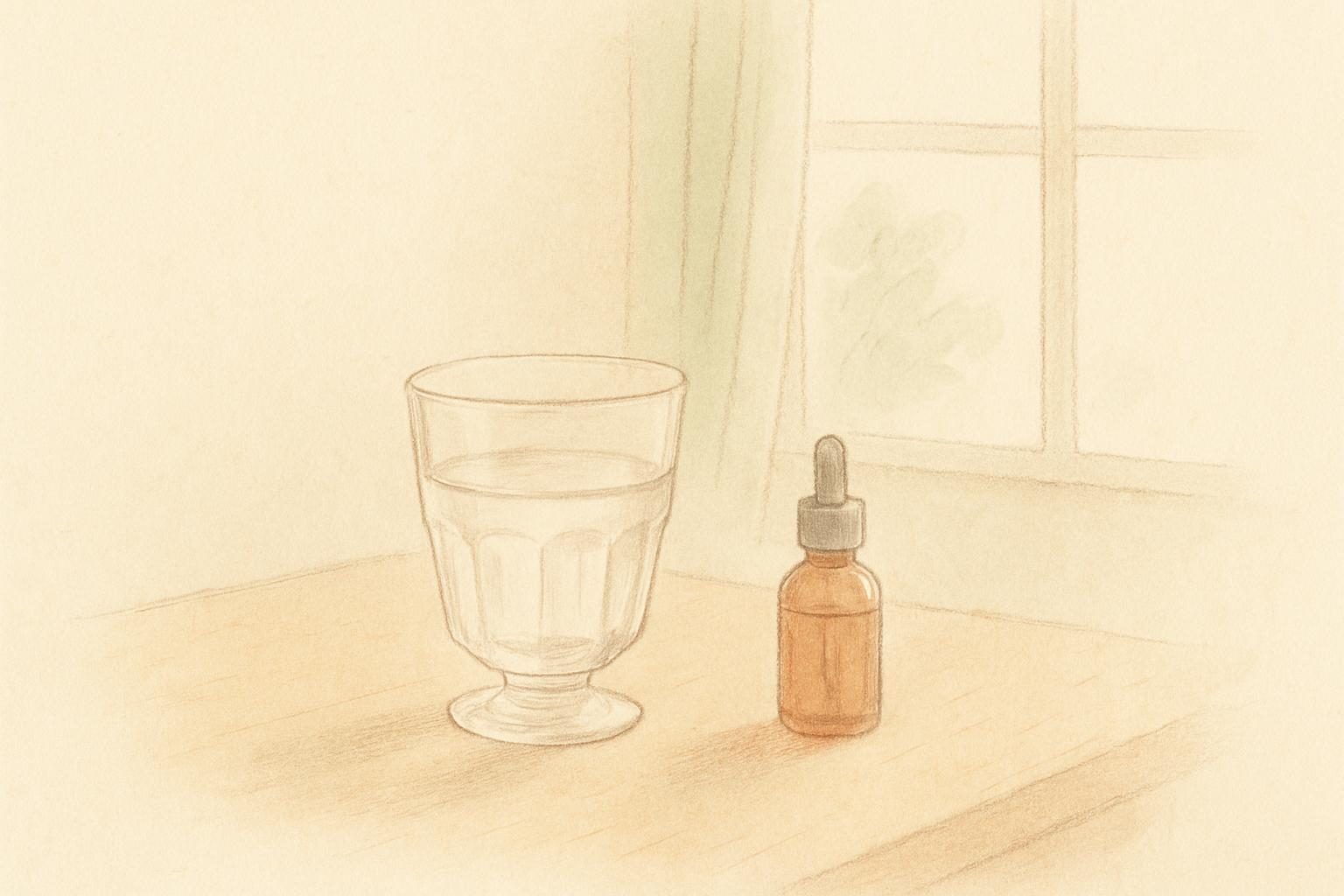
Consider a morning spent drinking only warm water. Poured into a Kagami Crystal glass, it might gently straighten one's posture. Fine tools do not make the water healthier. Choosing a carefully made vessel simply marks a boundary: this is time to attend to the body. A morning spent caring for skin with Weleda oil can be similar. Beyond any effect, the few minutes in which nothing else need occupy the mind may be precious.
If fasting is understood only as a tool for slimming or productivity, it may eventually run out of breath. Evidence is not universal, and individual conditions or illness may require medical consultation. But deliberately making space for time without food can also place a small margin inside a busy life. Choosing not to add something, rather than adding more: perhaps the original meaning of fasting remains within that quiet choice.
FAQ
- How much scientific support does sixteen-hour fasting have?
- Animal experiments suggest a connection with autophagy, but evidence of long-term human health benefits remains limited, so firm conclusions cannot be drawn.
- Can everyone fast safely?
- People with existing illnesses or health concerns should consult a doctor rather than make the decision alone.
ABC Editorial Team
Editorial team