
Culture
Who Owns the Festival Floats?
Sawara's festival and the art of keeping something going
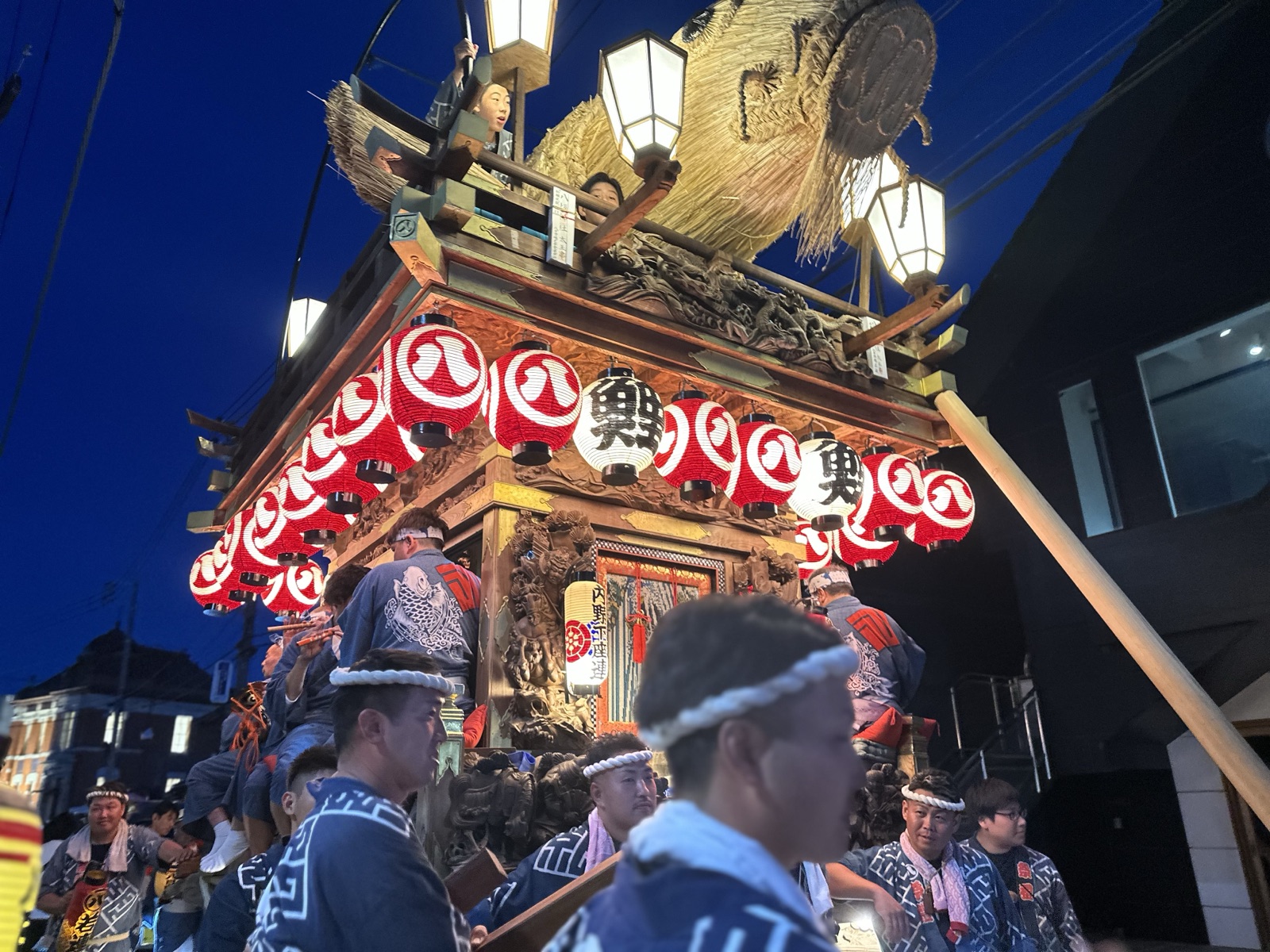
In Sawara, a riverside town in Katori, Chiba, autumn brings floats carrying enormous figures through the streets. What has this festival preserved since the Edo period, and what has it changed? An antiques enthusiast's perspective on continuity.
In October, Suwa Shrine's autumn festival fills Sawara in Katori, Chiba. More than twenty floats carrying figures over four metres tall are pulled through the narrow streets of the old town. Sawara's Grand Festival is among the thirty-three Yama, Hoko, Yatai float festivals inscribed on UNESCO's Intangible Cultural Heritage list in 2016.
The floats themselves could be called moving antiques. Giant figures made by master artisans from the Edo through Meiji periods, including a carp, Momotaro and Emperor Jimmu, carry their makers' skills and aesthetics into the present. The stillness of a face and the fabrics chosen for its robes hold traces of their time. Viewed with the same attention we give antiques, a figure emerges as a work in its own right, rather than merely a festival decoration.
Sawara's floats have another distinctive device. Whenever they pass beneath power lines, a hydraulic mechanism lowers the upper section carrying the figure, then raises it again. Later necessity has been grafted onto Edo-period craftsmanship. This is neither restoration nor alteration for its own sake, but a practical adaptation allowing the festival to continue passing through the town. It differs from the frozen beauty we may associate with cultural heritage.
What sustains a festival is not its floats or figures, but the hands that assemble, pull and put them away every year. Festivals in Sawara and elsewhere face aging participants and shrinking populations. Fewer young people inherit the music, while maintaining floats becomes more costly. UNESCO recognition does not change that structure. Inscription does not guarantee preservation; it recognizes something as worth continuing.
This recalls the idea of beauty in use, familiar from antiques and Japanese swords. A fine object gains little meaning from being shut away. Use, care and passage to another owner make it living culture. The floats may be the same. A beautiful figure stored in a warehouse does not, by itself, make a festival. Its meaning comes alive when townspeople pull it through the streets.
When we speak of protecting culture, we tend to imagine leaving it unchanged. Sawara's floats may suggest the opposite: adding mechanisms for power lines, adjusting dates and roles to the participants' circumstances, yet returning to the same streets each year. Their history is one of local decisions about what must remain and what may change.
Even if you cannot visit Sawara in October, this pattern can be considered through any local festival or old family tool. What should remain, and what can be let go? Who makes that decision? No grand conclusion is needed. Looking at a float, or a sword in a family storehouse, might be enough to carry that question home.
FAQ
- What is Sawara's Grand Festival?
- The collective name for the July Gion Festival at Yasaka Shrine and the October autumn festival at Suwa Shrine in Sawara, Katori, Chiba. Floats carrying giant figures are pulled through the town.
- Is it UNESCO Intangible Cultural Heritage?
- Yes. It was inscribed in 2016 as part of the Yama, Hoko, Yatai float festivals, a group of thirty-three festivals across Japan.
- When were the figures made?
- Many are attributed to master doll makers from the late Edo through Meiji periods. Origins and dates differ by float; consult the relevant neighbourhood association or preservation society for details.
ABC Editorial Team
Editorial team