

Culture
How Much Can We Trust What the Soil Tells Us?
Romanee-Conti and the ideas behind biodynamics
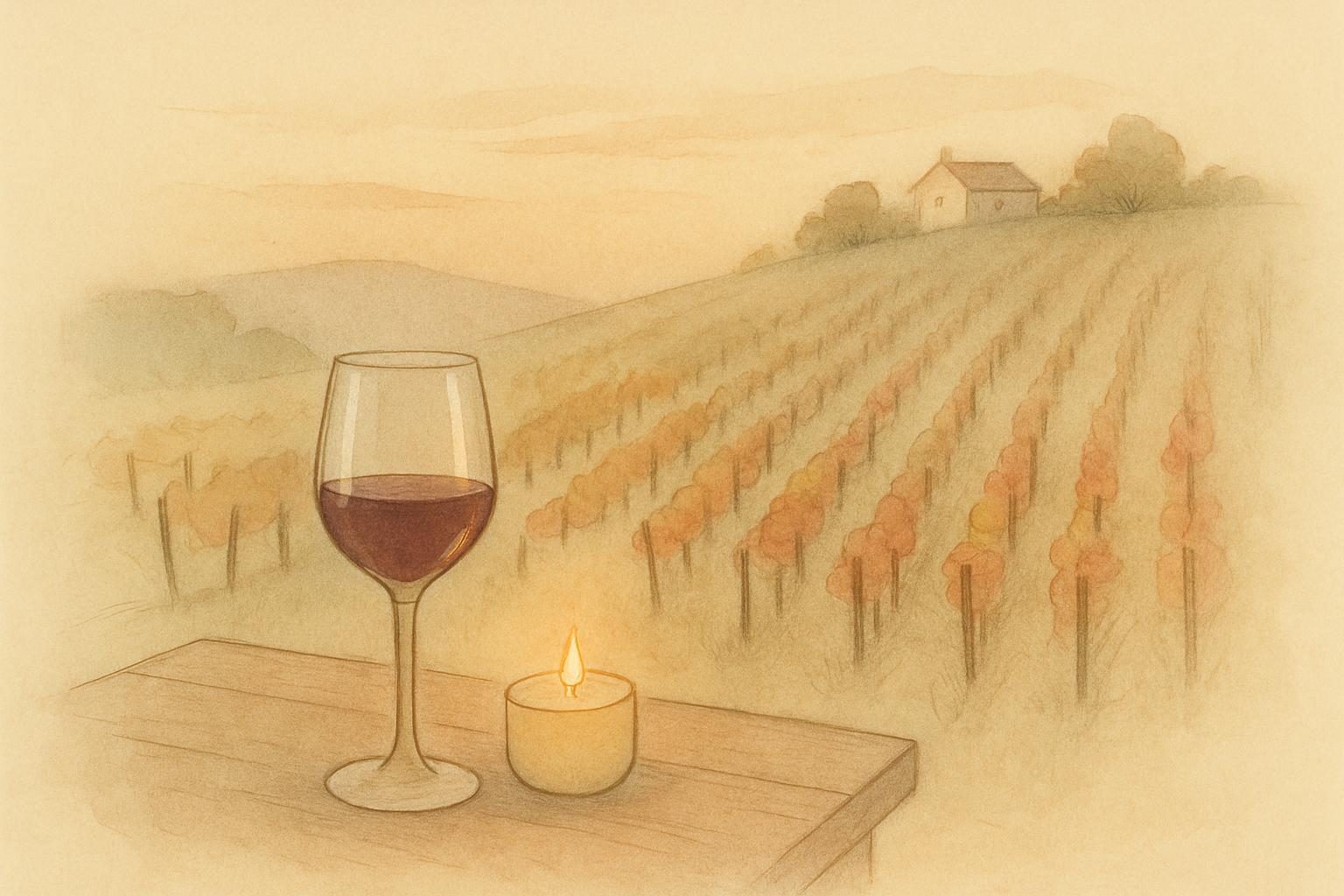
At harvest time, Romanee-Conti sounds almost mythical. Behind it, biodynamic farming stands between science and belief. We reconsider the word terroir.
Autumn brings more talk of wine: harvest years, the turns of the weather and that annually repeated word, terroir. Flavour born from land, climate and human care is not a wrong explanation. Yet the word is so convenient that its substance can quietly thin out.
Romanee-Conti still retains a special resonance. From a tiny Burgundy vineyard, the wine is discussed not only for its price but also for its cultivation: biodynamic farming.
Biodynamics began with agricultural lectures by the early-twentieth-century thinker Rudolf Steiner. Sowing follows lunar and planetary positions; compost-filled cow horns are buried; celestial rhythms are linked to fieldwork. It forms part of his anthroposophy. Many researchers are skeptical about scientific reproducibility. Clear statistical support for its effects is limited, and it stands apart from mainstream agronomy. We should state that honestly.
Yet producers practising it repeatedly say the soil has changed: richer microbial life, different rooting patterns, thicker grape skins. These are experiences difficult to quantify, a different kind of knowledge from scientific proof. Whether we should simply discard what lies between belief and experience is disputed. ABC does not intend to take one side.
Interestingly, attention to unseen forces is not so distant from Japanese farming and ritual. At Sawara's autumn festival, the float procession itself is an offering for abundant harvests. A good harvest has been understood as the outcome not only of human effort but of accommodation with something unseen. Cultivating by celestial rhythms and thanking a local tutelary deity belong to different traditions, but quietly share the premise that nature exceeds human knowledge.
Drinking Romanee-Conti may therefore mean more than tasting rare wine. Visible science and something like invisible trust coexist. Chemical analysis cannot exhaust an account of taste, because memory, expectation and the atmosphere of the occasion also become part of flavour. Some call this a placebo effect, but that too belongs within the question of how people experience taste.
Whenever terroir is consumed as tourism or advertising copy, a place's particular time, the accumulation of decades and centuries, seems a little diluted. How much can we trust what the soil tells us? The question concerns science, but also how attentively we can spend time with one place. We need not hurry an answer. Looking at the colour in a glass for a while may be enough.
FAQ
- Are biodynamics' effects scientifically proved?
- Clear statistical proof is limited, and mainstream agronomy is skeptical. Practising producers often report changes in their soil, so assessments differ.
- Is all Romanee-Conti produced biodynamically?
- Some Burgundy producers, including the vineyard in question, use biodynamics, but practices vary. Consult producers' published information for individual details.
ABC Editorial Team
Editorial team