
Art
The Portrait Painters' Anxiety Returns
What photography took, what AI takes, and what remains
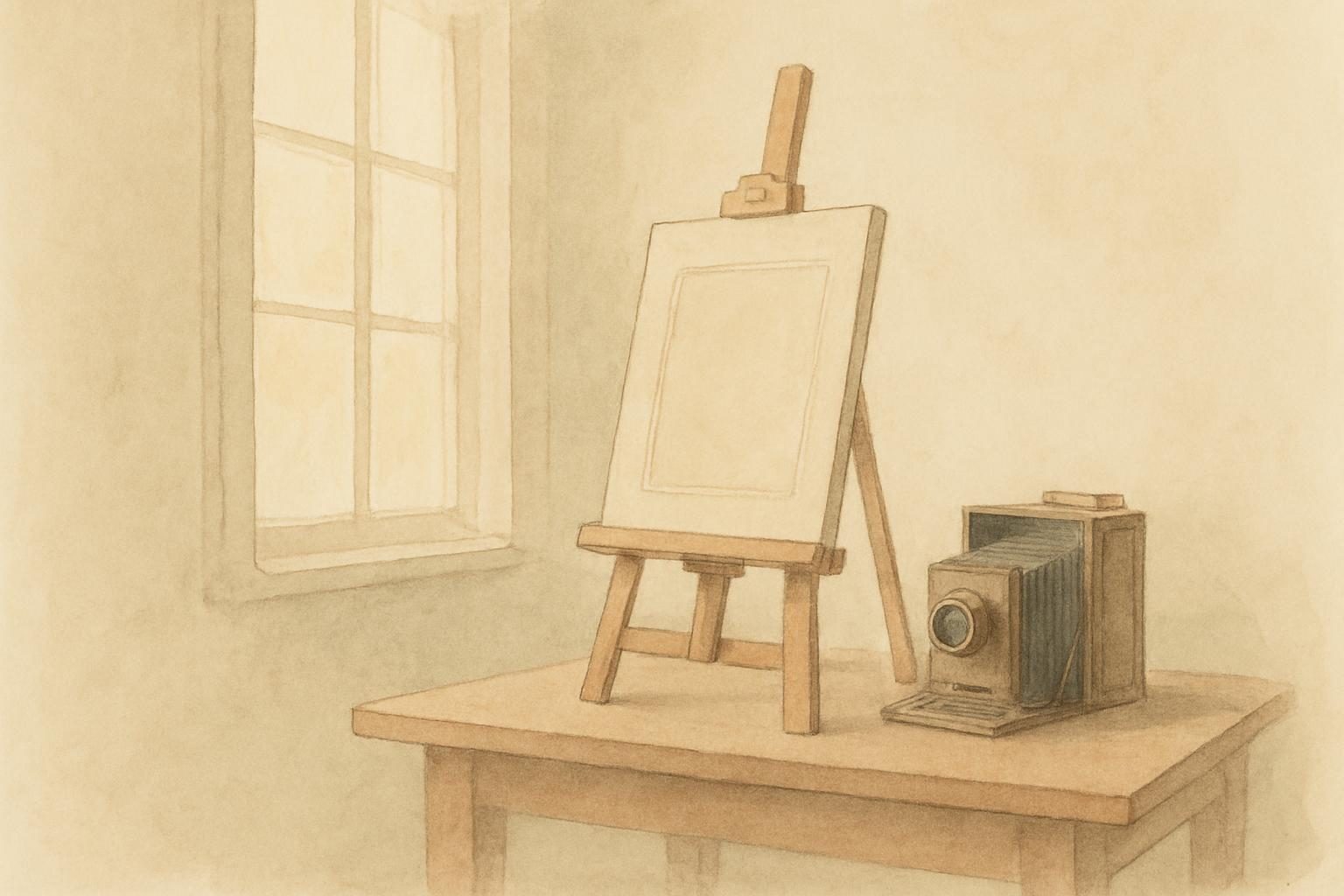
In 1839, photography alarmed portrait painters. Some 180 years later, AI image generation poses a similar question. What has technology taken from depicting people, and what could it never take?
The act of capturing a face has always carried tension. When the daguerreotype was announced in France in 1839, many painters who earned their living from portraits reportedly feared losing their work. 'From today, painting is dead' is widely attributed to Paul Delaroche, although the source of the anecdote is uncertain. Whether or not he said it, the fact that it continues to be quoted as an expression of the period's mood is itself interesting.
What actually happened? Portrait painting did not disappear. Many historians instead see photography's assumption of the task of accurate likeness as giving painting a different freedom. Photography is considered part of the background to the Impressionists' interest in changing light and brushwork itself. But this was a complex change with many causes. It would be wrong to claim that photography alone produced Impressionism. A more measured interpretation is that technology rearranged the division of expressive roles.
A similar tension is returning in another form. Given an instruction, image-generating AI can produce a portrait within seconds. Many illustrators and portrait artists sense that the nature of their work is changing. Again, we hear both 'painting is finished' and 'we have simply gained another tool'. It is too early to declare either side right. As some 180 years ago, answers will slowly take shape in practice.
Yet there is a quiet difference. Photography needed a real person before the lens to form an image. AI portraits can depict faces that have never existed. This seems less a technical advance than a change touching the premise of depicting a person. When drawing someone no longer necessarily requires someone to be there, perhaps what we sought in portraits becomes clearer.
People continued commissioning portraits after photography appeared. Perhaps they valued not an accurate record but the time spent being drawn, the experience of exchanging a gaze. Even when AI generates faces with extraordinary speed, the desire for that time may not disappear so easily. Technology renews our tools. It may not be able to renew our wish to look at another person and to be seen in return.
This is not the first time portrait painters have felt anxious. History has already offered part of an answer. Not everything repeats, but the willingness to keep asking without panic remains as useful as it was then.
FAQ
- Did Paul Delaroche really say that painting was dead?
- It is widely quoted, but its source is unclear and scholars debate its authenticity.
- Did portrait painters really lose work because of photography?
- Some were affected, but portrait painting itself continued in changing forms. It was not a simple ending.
- Is AI portrait generation merely a repeat of photography's arrival?
- There are similar anxieties, but AI can depict nonexistent people, among other differences. It is not a straightforward repetition.
ABC Editorial Team
Editorial team