
Cambodia × Japan · A cultural reading series
Exploring Our Cultural Kinship
A reading series exploring cultural connections and differences between Cambodia and Japan through belief, place, everyday life and heritage care.
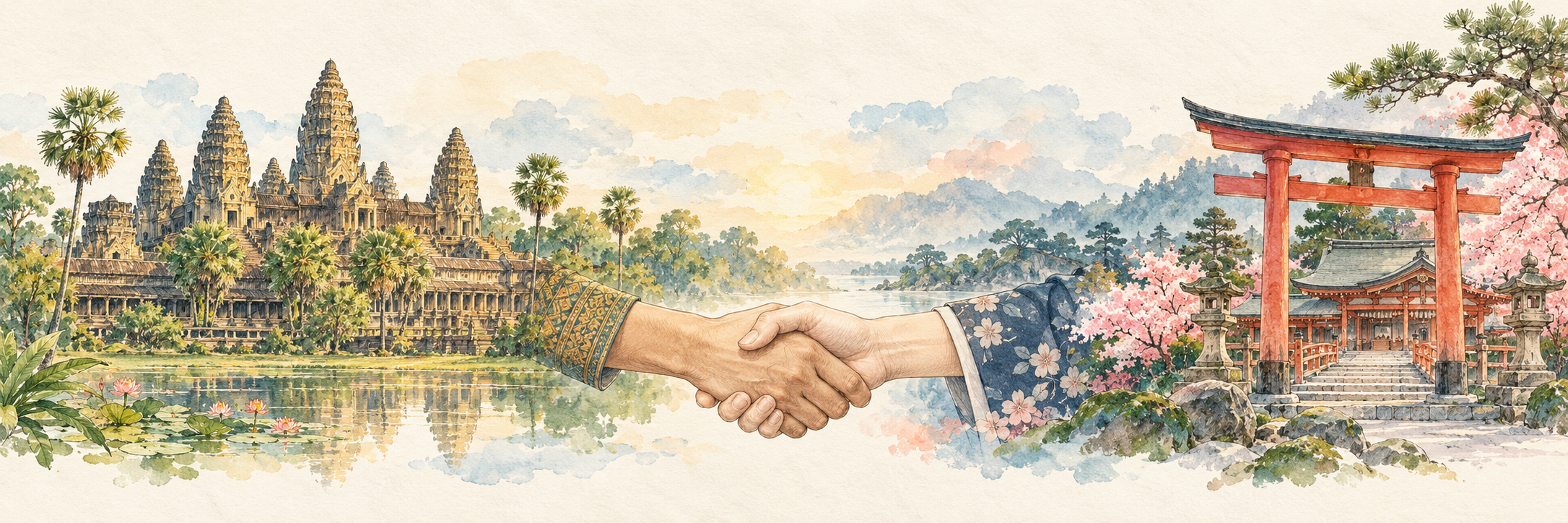
Discover Cambodia and Japan through histories of faith, sacred places, everyday traditions, and the people who care for cultural heritage. Here, kinship means a friendship built through curiosity and understanding, with room for the differences that make each story its own.
Begin with beliefs, sacred places, everyday traditions and heritage care. Then explore seasonal celebrations, weaving, performance and documented early encounters. Each story offers a starting point for learning about one another.
Perspectives to explore
8 short reads
01
Where Traditions Meet: Angkor and Japan’s Kami and Buddhas
Angkor’s Hindu and Buddhist layers and Japan’s encounters between kami and Buddhism offer two different histories of people making faith meaningful in their own surroundings.
Read the story02
Sacred Landscapes: Learning to Look Beyond the Monument
Angkor and Ise invite different ways of noticing the relationship between sacred buildings, their surroundings, and the practices that keep them meaningful.
Read the story03
Culture in Our Hands: Everyday Traditions, Shared Curiosity
A Cambodian woven cloth and Japanese food traditions show how cultural knowledge can live in useful objects, familiar skills, and time spent together.
Read the story04
Friendship Through Care: Cambodia and Japan at Angkor
Cooperation at Angkor offers a documented example of Cambodian and Japanese specialists working together, with UNESCO and other partners, to care for heritage across generations.
Read the story05
When the Seasons Gather Us: Rivers, Rice and Celebration
Cambodia’s Water Festival and the rice-planting traditions of Mibu offer different ways to see how seasonal work becomes a shared occasion.
Read the story06
Before the Loom: Pidan and the Patience of Pattern
Cambodian pictorial silk pidan and Japanese ramie textiles reveal the planning, skilled hands and patient teaching that a woven pattern can hold.
Read the story07
A Story Takes the Stage: Sbek Thom and Bunraku
Khmer shadow theatre and Japanese Bunraku show how a story takes shape through the coordinated work of voices, instruments and skilled performers.
Read the story08
Across the Sea: Letters, Merchants and Early Encounters
A diplomatic chronology offers specific traces of early-modern contact between Cambodia and Japan, opening questions about the people who travelled and the communities they joined.
Read the story